Case Study — Product Design

renvu.

renvu.

"I believe that young users aged 18-25 will feel in control of their subscription spending if we surface renewal awareness before the charge happens — not as a complex dashboard but as a simple, timely notification system — because my research shows 100% of users currently have no system at all and their pain is always reactive, never proactive."

Product

Subscription App

Market

INDIA

Year

2026

Role

Zero to One

(Product Designer)

Brand

"Know before it goes."
00

OVERVIEW

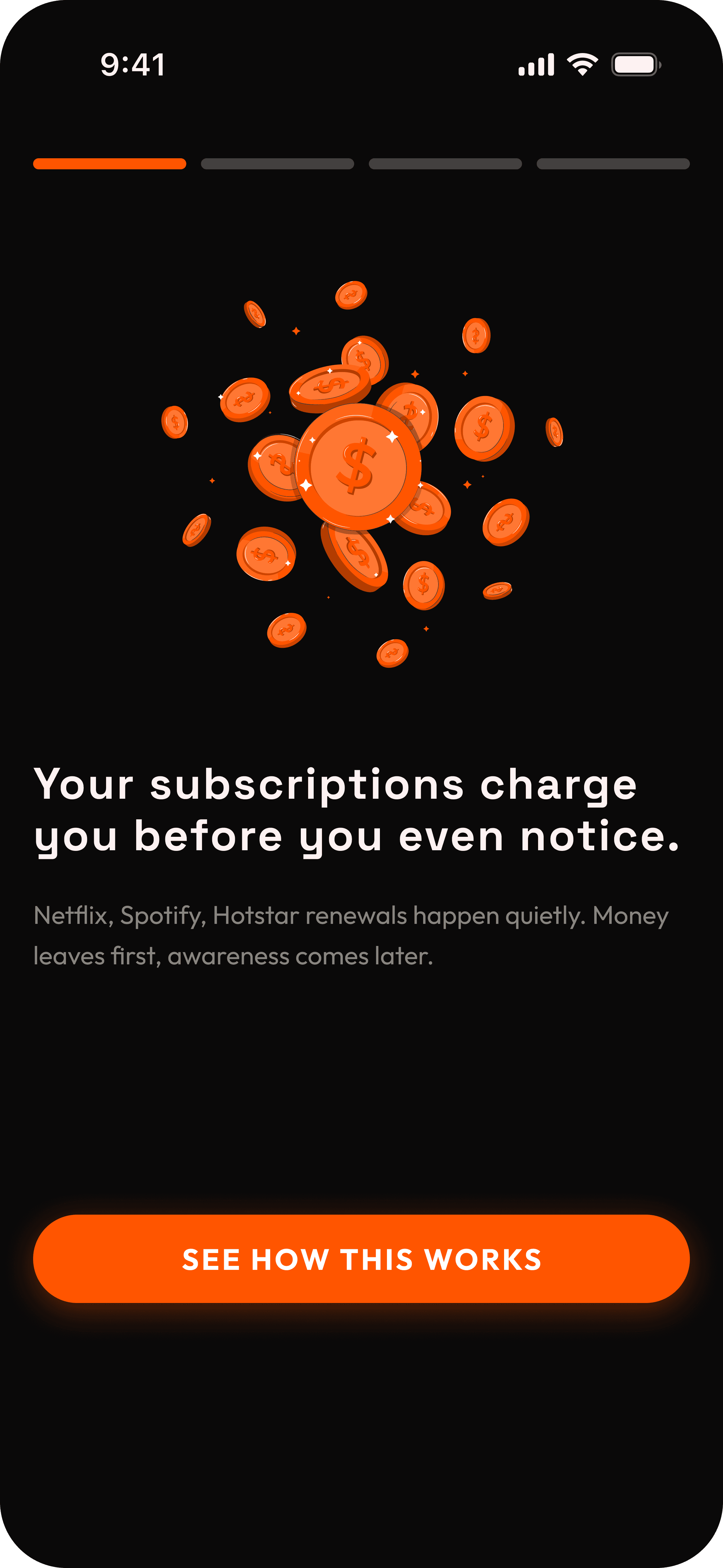
Subscription money disappears before anyone notices.

Subscription money disappears before anyone notices.

This is a zero-to-one product design project — from original user research through to a fully branded, production-ready design system. No brief. No client. Just a real problem, real users, and a complete product built to solve it.

THE PROBLEM

Young Indians are losing money to forgotten
subscriptions every month. The money
leaves silently. The awareness comes too
late — always after the charge.

The Solution

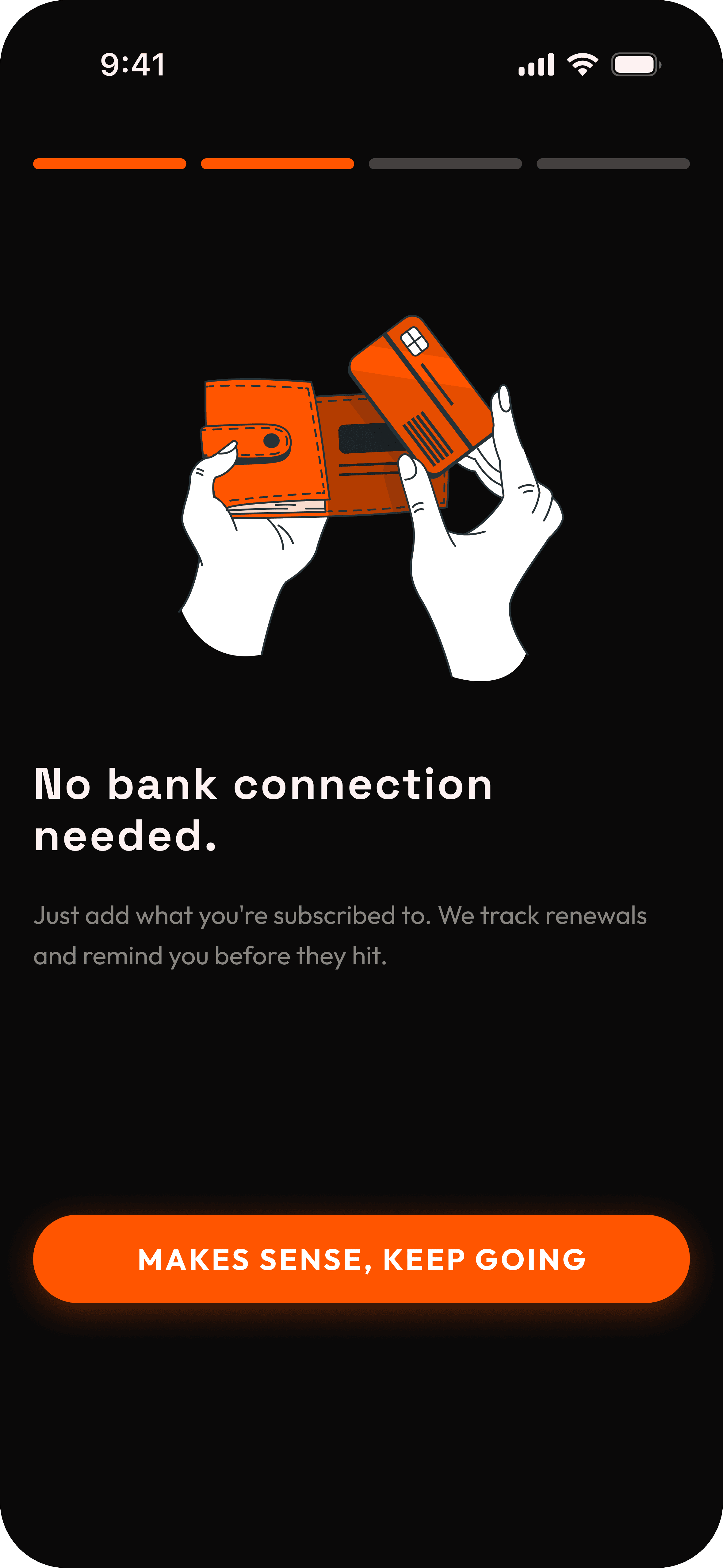
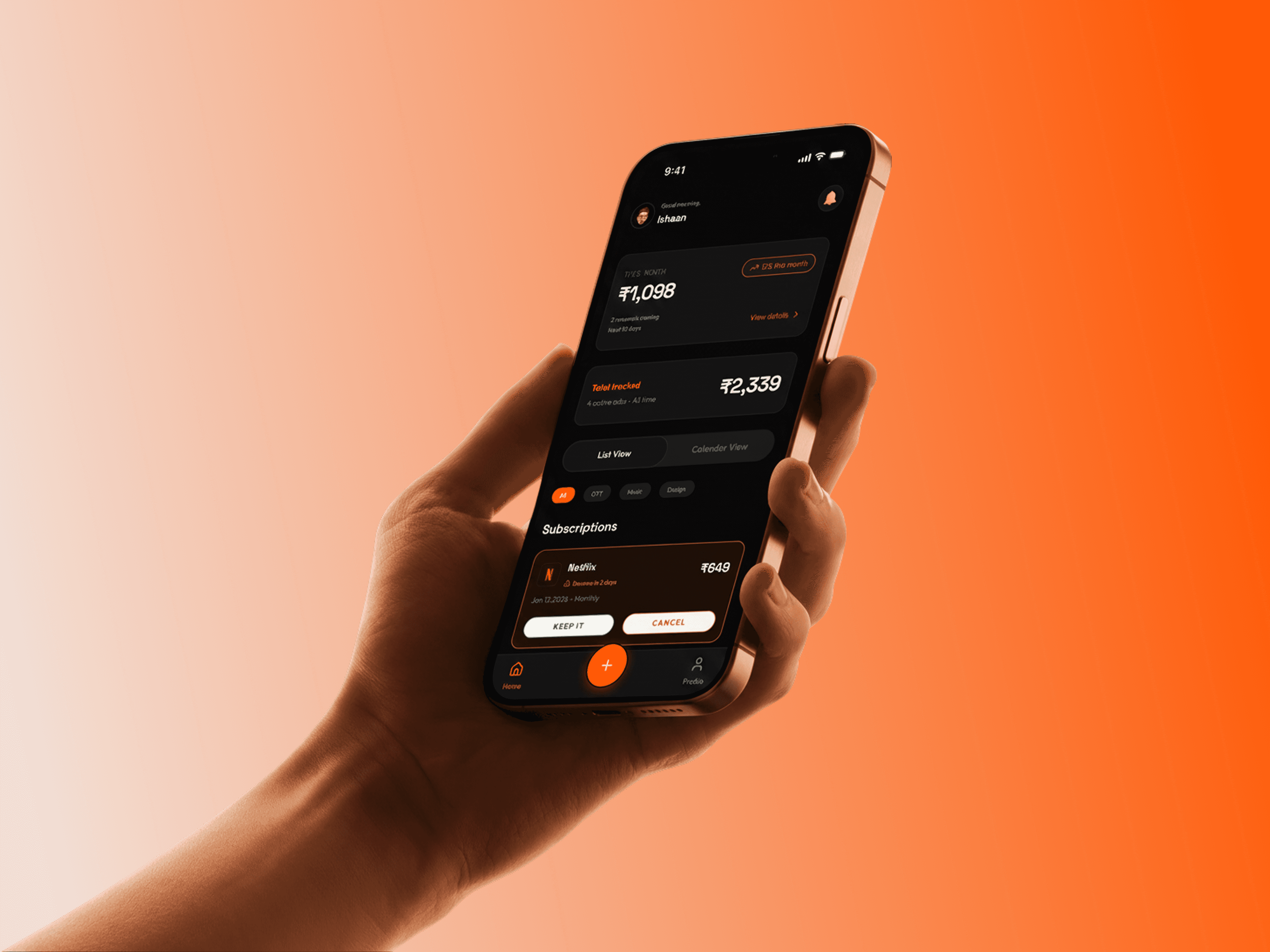
renvu — a lightweight subscription tracker
that
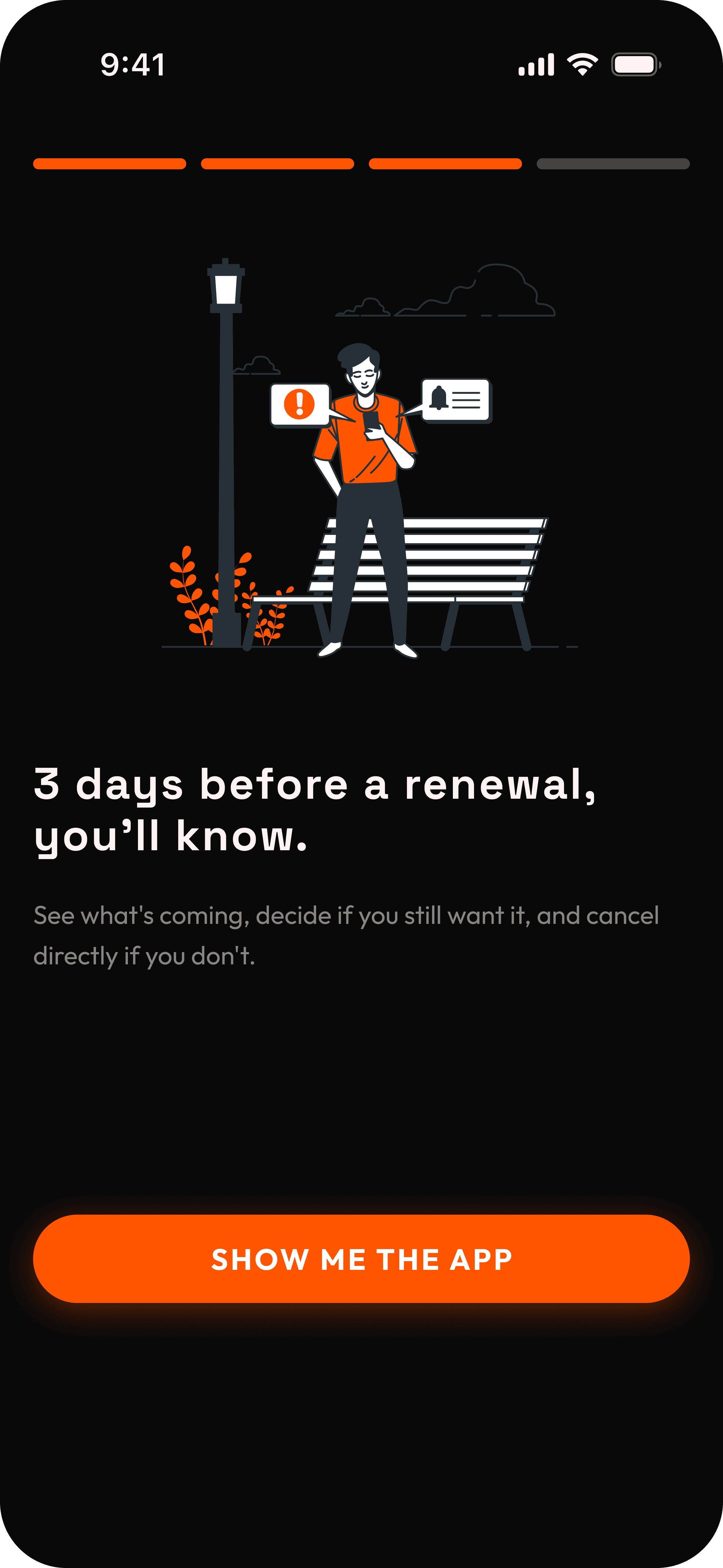
alerts you 3 days before any renewal,
requires no bank connection, and lets you
cancel directly if you don't want it.

The Outcome

14 design decisions documented from
research. Full brand identity. Atomic design
system.
24 screens across 7 user flows.
Complete UX writing applied.

Most subscription tracking apps fail at the same point — they are
either too complex and data-hungry for casual users, or too passive
and forgettable after setup. Nobody had built the middle ground.

The opportunity: a lightweight, proactive app that requires no bank
connection, no permanent inbox access, and simply tells you what is
coming before it hits your account.

I ran this project the way a product thinker would — starting from
scratch with real user research, making decisions backed by evidence,
and documenting every choice so any developer could build from the
output.

This is not a redesign. This is an original product, built from a real insight, for a real user. 

01

THE PROBLEM

The invisible drain.

The invisible drain.

Before designing anything, I needed to understand the actual problem. Not the surface problem — the real one underneath.

Before designing anything, I needed to understand the actual problem. Not the surface problem — the real one underneath.

Young people lose money not because they are careless, but because subscriptions are designed to be invisible — they renew silently, in the background, with no natural moment of awareness. By the time someone notices, the money is already gone. The feeling is not frustration. It is a quiet, recurring sense of being slightly out of control of something small but personal.

Young people lose money not because they are careless, but because subscriptions are designed to be invisible — they renew silently, in the background, with no natural moment of awareness. By the time someone notices, the money is already gone. The feeling is not frustration. It is a quiet, recurring sense of being slightly out of control of something small but personal.

This framing matters. The solution is not a tool that helps people remember — it is a tool that changes the timing of awareness. From reactive (after the charge) to proactive (before it happens).

This framing matters. The solution is not a tool that helps people remember — it is a tool that changes the timing of awareness. From reactive (after the charge) to proactive (before it happens).

02

RESEARCH

50+ real people. Zero were prepared.

50+ real people. Zero were prepared.

I ran a survey targeting Indians aged 18–25 — the demographic most likely to have multiple streaming and productivity subscriptions. I screened for real subscription users and removed invalid responses.

I ran a survey targeting Indians aged 18–25 — the demographic most likely to have multiple streaming and productivity subscriptions. I screened for real subscription users and removed invalid responses.

50+

Valid survey
respondents

100%

Had never used a
subscription tracker

1–5

Active subscriptions
per person

0

Had a system to track
their renewals

The most critical finding was not which apps people used or how much they spent. It was the 100%. Every single respondent had no tracking system of any kind. That is not a feature gap — it is a category gap. These people are not looking for a better tracker. They do not know a tracker could exist for them.

The most critical finding was not which apps people used or how much they spent. It was the 100%. Every single respondent had no tracking system of any kind. That is not a feature gap — it is a category gap. These people are not looking for a better tracker. They do not know a tracker could exist for them.

Key respondents

RESPONDENT — PAVAN
The renewal trigger insight

Pavan mentioned something that changed the entire product direction: he wanted to renew his subscriptions from inside the app, not just track them. This revealed a deeper desire — he didn't want a logbook, he wanted an action hub. It informed the direct cancellation redirect feature.

RESPONDENT — LIAM (LONDON)
The only prior tracker user

Liam was the only person in the survey who had used a subscription tracker. His feedback: "The visualization helped, but the navigation was confusing." This confirmed two things — visualization has value, and existing apps have a complexity problem. Both shaped renvu's design direction.

03

INSIGHTS

Five things the research made undeniable.

Five things the research made undeniable.

I ran a survey targeting Indians aged 18–25 — the demographic most likely to have multiple streaming and productivity subscriptions. I screened for real subscription users and removed invalid responses.

I ran a survey targeting Indians aged 18–25 — the demographic most likely to have multiple streaming and productivity subscriptions. I screened for real subscription users and removed invalid responses.

INSIGHT 01
The pain is always reactive

Pain arrives after the bank SMS. Never before. 100% of users described discovering a charge they hadn't anticipated. The product's job is to move that moment of awareness earlier. Not to help people remember — to tell them before they need to.

INSIGHT 02
Privacy is a barrier, not a feature gap

Users did not mention wanting more features. They mentioned not wanting to give bank access. The barrier to adoption is trust, not value. Any product that requires bank credentials will lose the target user at step one — before showing any value.

INSIGHT 03
Two distinct user types emerged

Type A — wants lightweight alerts only. No dashboard, no insights, just "tell me before it hits." Type B — wants full control: spending graphs, history, platform-level detail. Designing for both equally creates a product that works for neither. I chose Type A as primary.

INSIGHT 04
Cancellation friction is real

Multiple respondents admitted staying subscribed to things they didn't use because cancellation was "too much effort." This was not laziness — it was cancellation UX designed to be hard. Direct deep-linking to a platform's cancellation flow became a core feature.

Design hypothesis: We believe that young users aged 18–25 will feel in control of their subscription spending if we surface renewal awareness before the charge happens — not as a complex dashboard but as a simple, timely notification system — because our research shows 100% of users currently have no system at all and their pain is always reactive, never proactive.

Design hypothesis: We believe that young users aged 18–25 will feel in control of their subscription spending if we surface renewal awareness before the charge happens — not as a complex dashboard but as a simple, timely notification system — because our research shows 100% of users currently have no system at all and their pain is always reactive, never proactive.

04

USER PERSONA

Meet Ishaan.

Meet Ishaan.

Not a made-up demographic. Synthesized directly from the survey respondents — specifically the pattern that appeared in 46 of 50+ responses.

Not a made-up demographic. Synthesized directly from the survey respondents — specifically the pattern that appeared in 46 of 50+ responses.

Ishaan Reddy

19 · Engineering Student · Visakhapatnam

"I paid for Spotify for 2 months after I stopped using it. I only noticed when I checked my bank statement."

Spotify User

OTT Watcher

Design Student

IOS Device

Active Subscriptions

Netflix · Spotify · Figma · iCloud — ₹1,767/month total

Current Tracking Method

Memory. No app, no spreadsheet, no reminder. Just hoping he notices the SMS in time.

The Scenario — "The SMS He Was Not Expecting"

Tuesday, 9:47am. Bank SMS arrives. Spotify renewed — ₹119 deducted. Ishaan realizes he hasn't used it in 6 weeks. The money is gone. The awareness came 5 seconds too late.

What He Actually Needs

Not a dashboard. Not spending analytics. Just: tell me 3 days before anything renews, and let me cancel directly if I don't want it.

05

COMPITITIVE ANALYSIS

Two apps. Two different failures.

Two apps. Two different failures.

I analyzed the two most prominent competitors — Truebill and Subtrack — not to copy them but to understand the gap they both missed.

I analyzed the two most prominent competitors — Truebill and Subtrack — not to copy them but to understand the gap they both missed.

Truebill

Comprehensive but demanding.

❌ Forces bank connection upfront

❌ Heavy onboarding process

❌ Complex, overwhelming UI

✔️ Full financial picture

renvu.

Lightweight and proactive.

✔️ No bank connection needed

✔️ No bank connection needed

✔️ Immediate action on renewals

✔️ Simple, focused interface

✔️ Value shown from first use

Subtrack

Zero friction but passive.

❌ No alerts or notifications

❌ No dashboard or insights

❌ No reason to return

✔️ Easy manual entry

"Existing apps are either too complex and data-hungry for casual users, or too passive and forgettable after setup. Nobody has built the middle — a lightweight, proactive app that requires no account, no bank connection, and simply tells you what is coming before it hits."

"Existing apps are either too complex and data-hungry for casual users, or too passive and forgettable after setup. Nobody has built the middle — a lightweight, proactive app that requires no account, no bank connection, and simply tells you what is coming before it hits."

06

DEESIGN DESICIONS

14 decisions. All from research.

14 decisions. All from research.

Every design decision in renvu is traceable to a research finding. Nothing was designed on instinct alone. Here are the decisions that shaped the product — and the evidence behind each.

Every design decision in renvu is traceable to a research finding. Nothing was designed on instinct alone. Here are the decisions that shaped the product — and the evidence behind each.

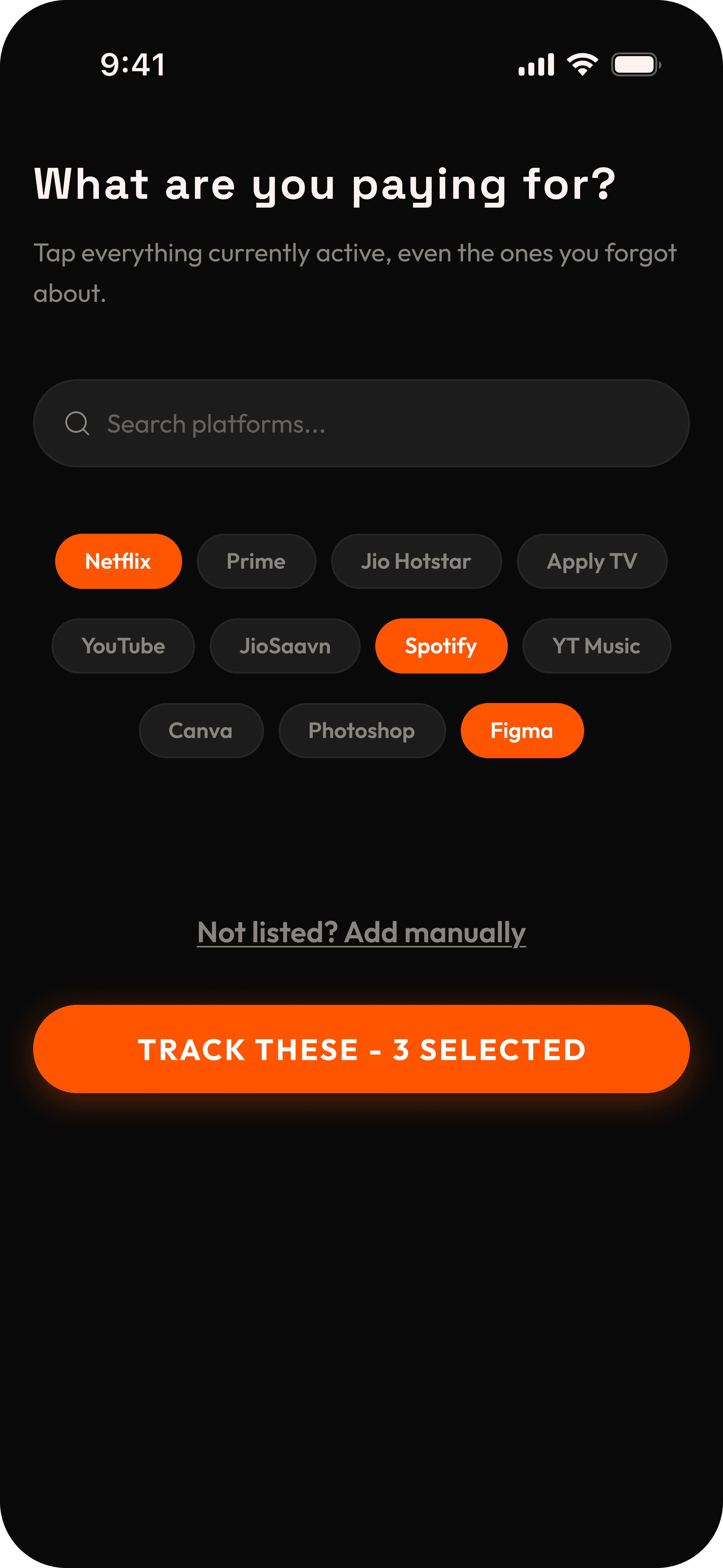
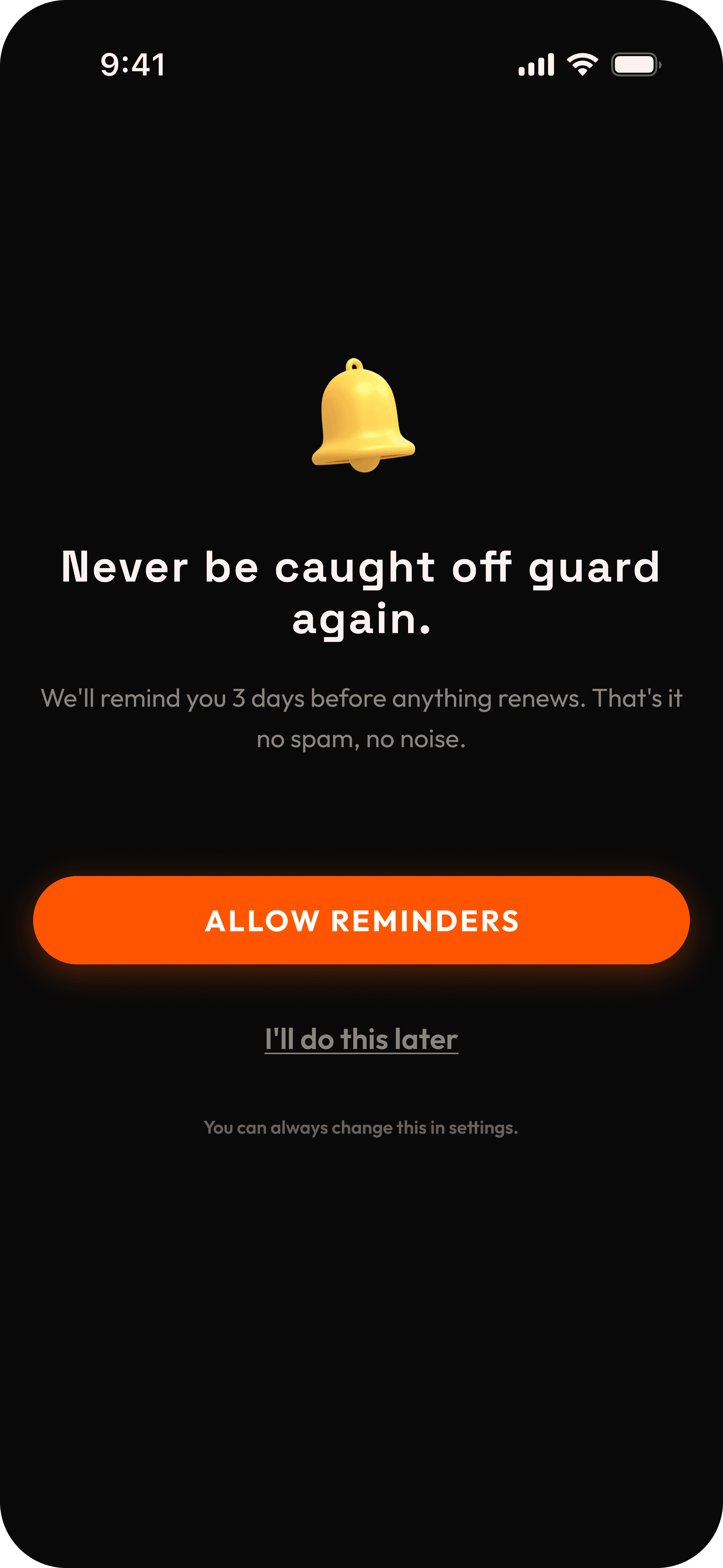
3-day alerts

Users react to charges, not calendars. Alerts arrive 3 days before renewal, not same-day.

Zero bank access

Privacy was the top adoption barrier. No bank or card connection required.

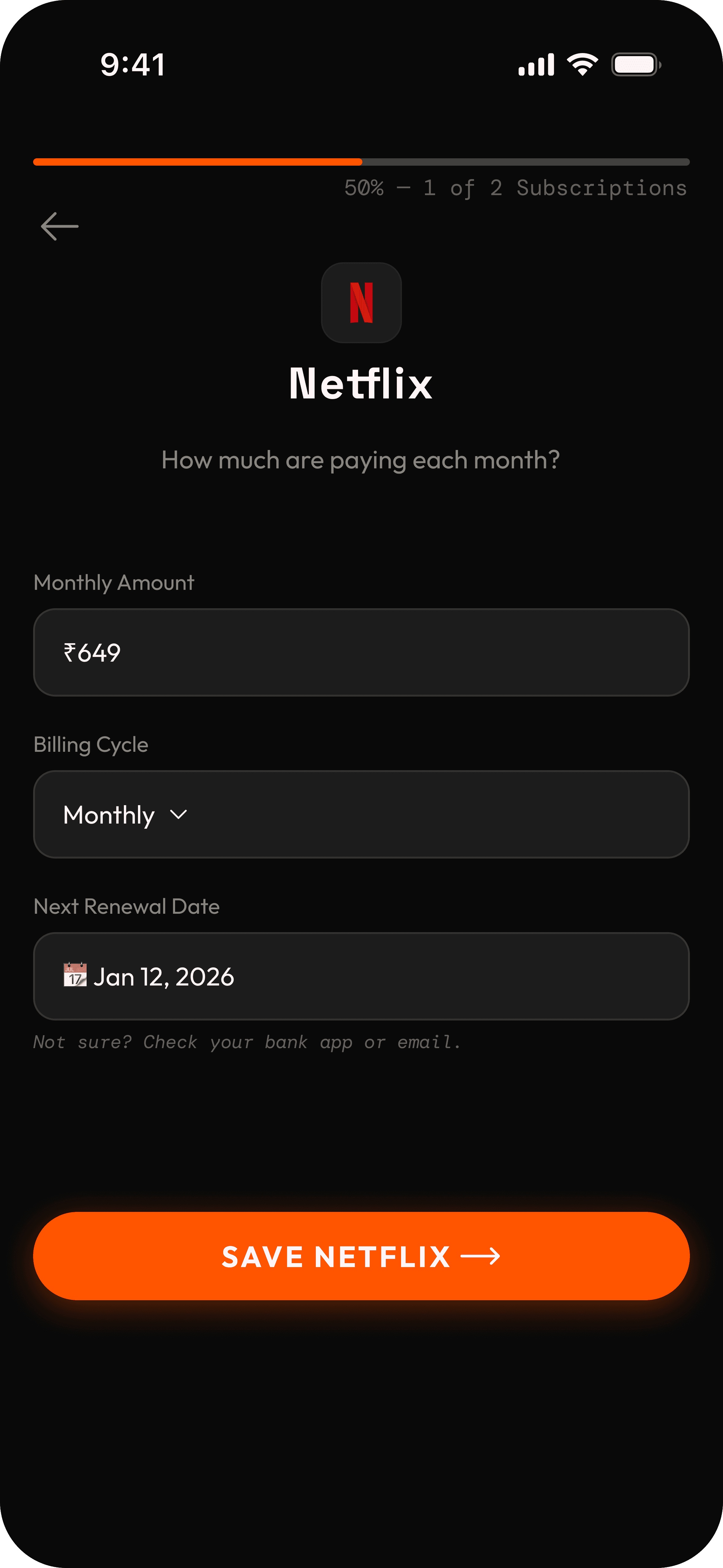
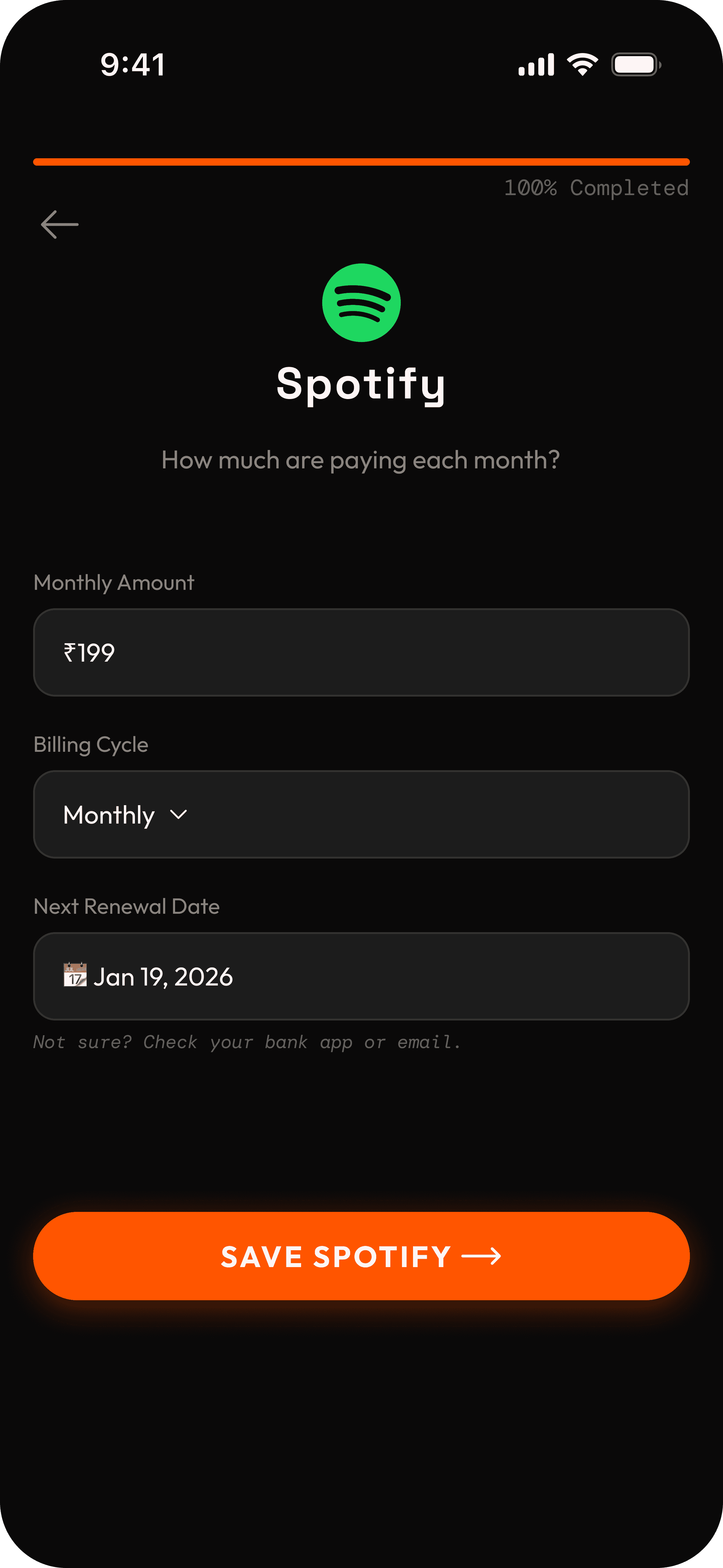
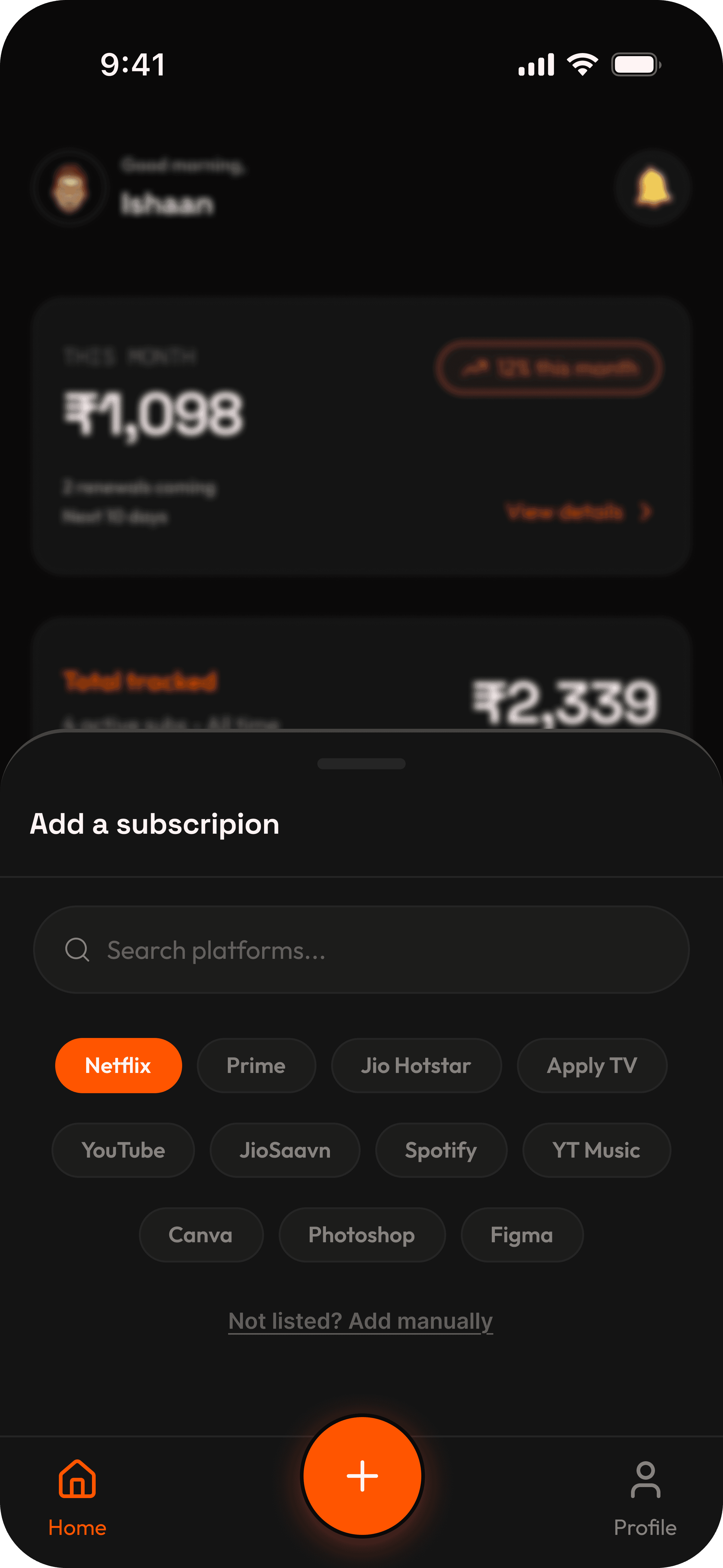
Manual entry

Preloaded platform list keeps input fast without touching user data.

Deep-link cancel

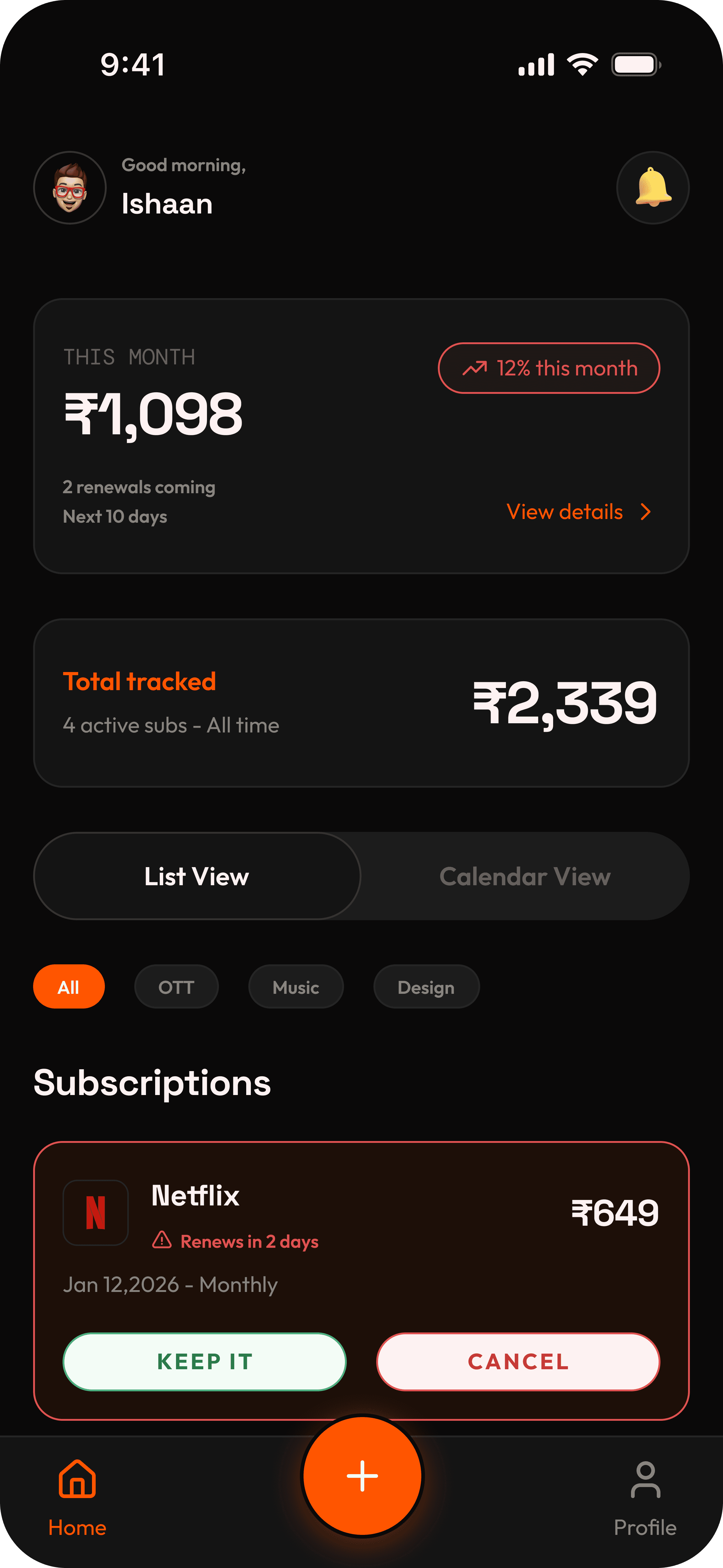
One tap opens the platform's own cancellation page. No hunting through settings.

Urgency colors

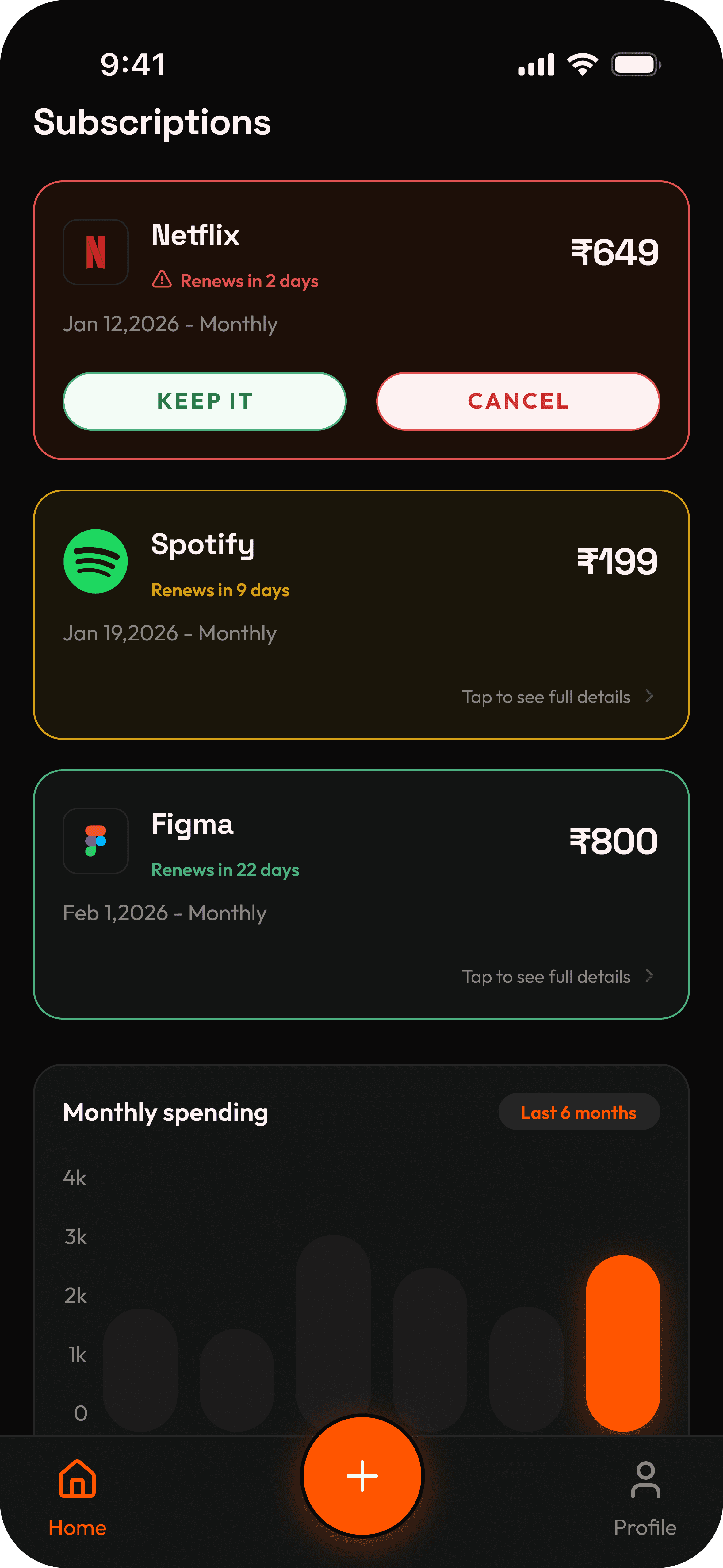
Color-coded system shows renewal proximity at a glance - red, amber, green.

Lightweight UI

Type A users want speed, not features. Every screen stays minimal and focused.

07

HIFI-SCREENS

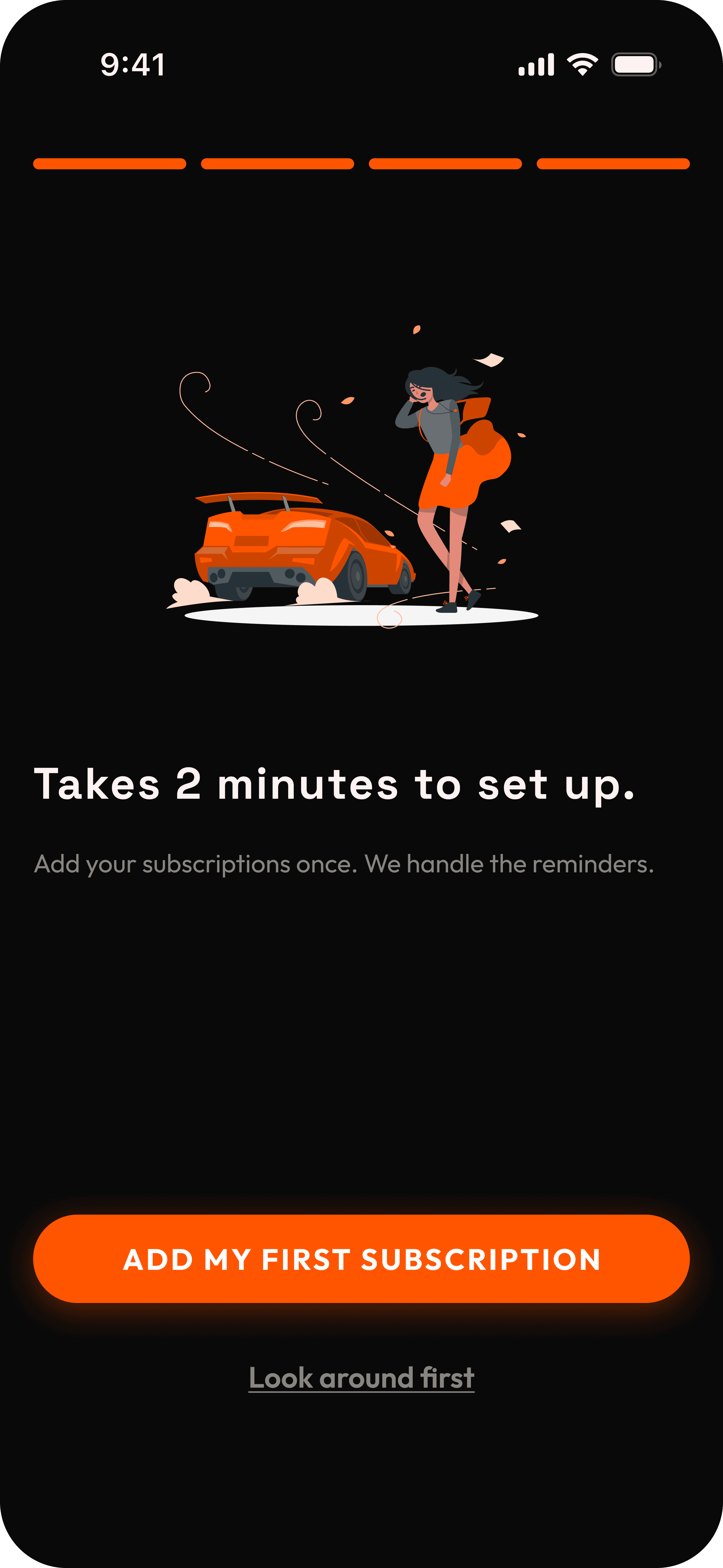
24 screens. Every word decided.

24 screens. Every word decided.

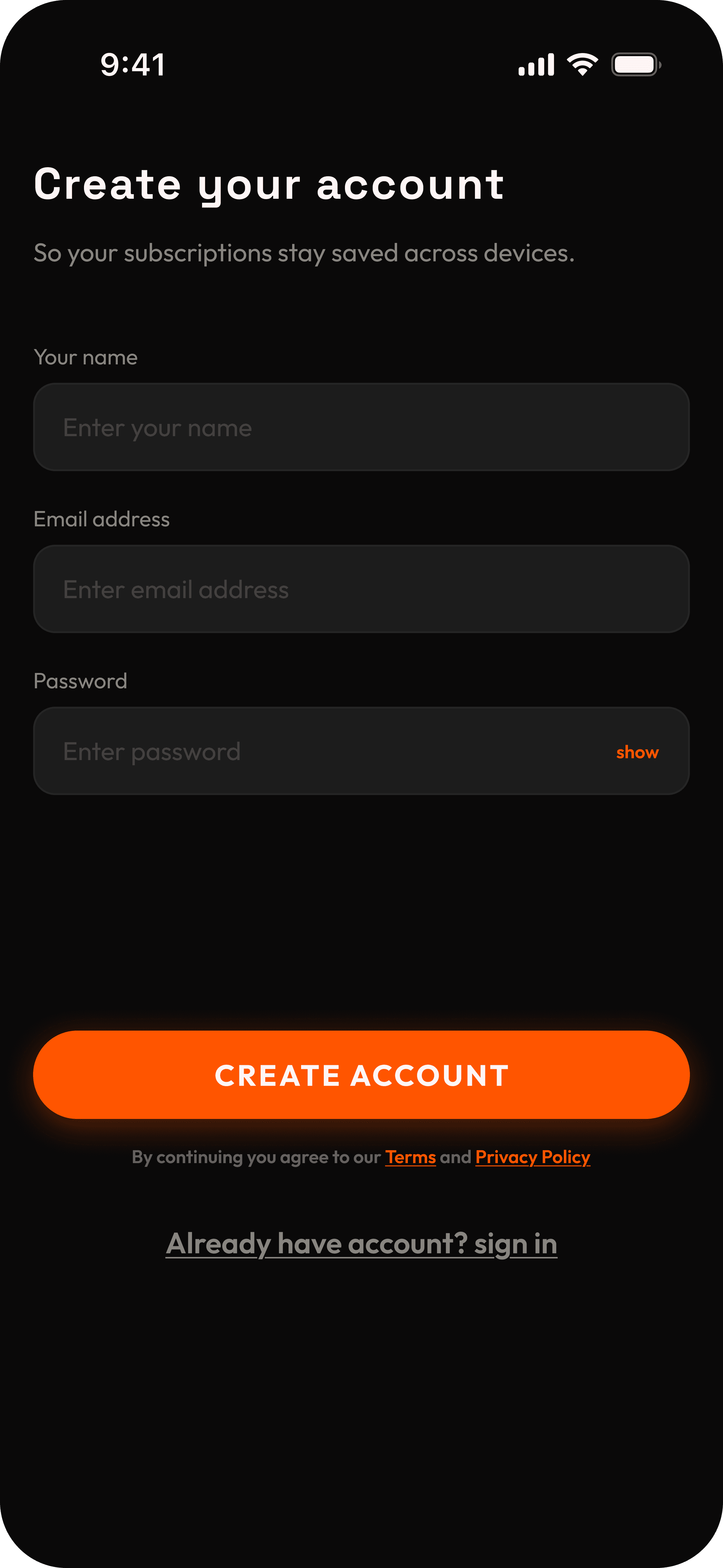
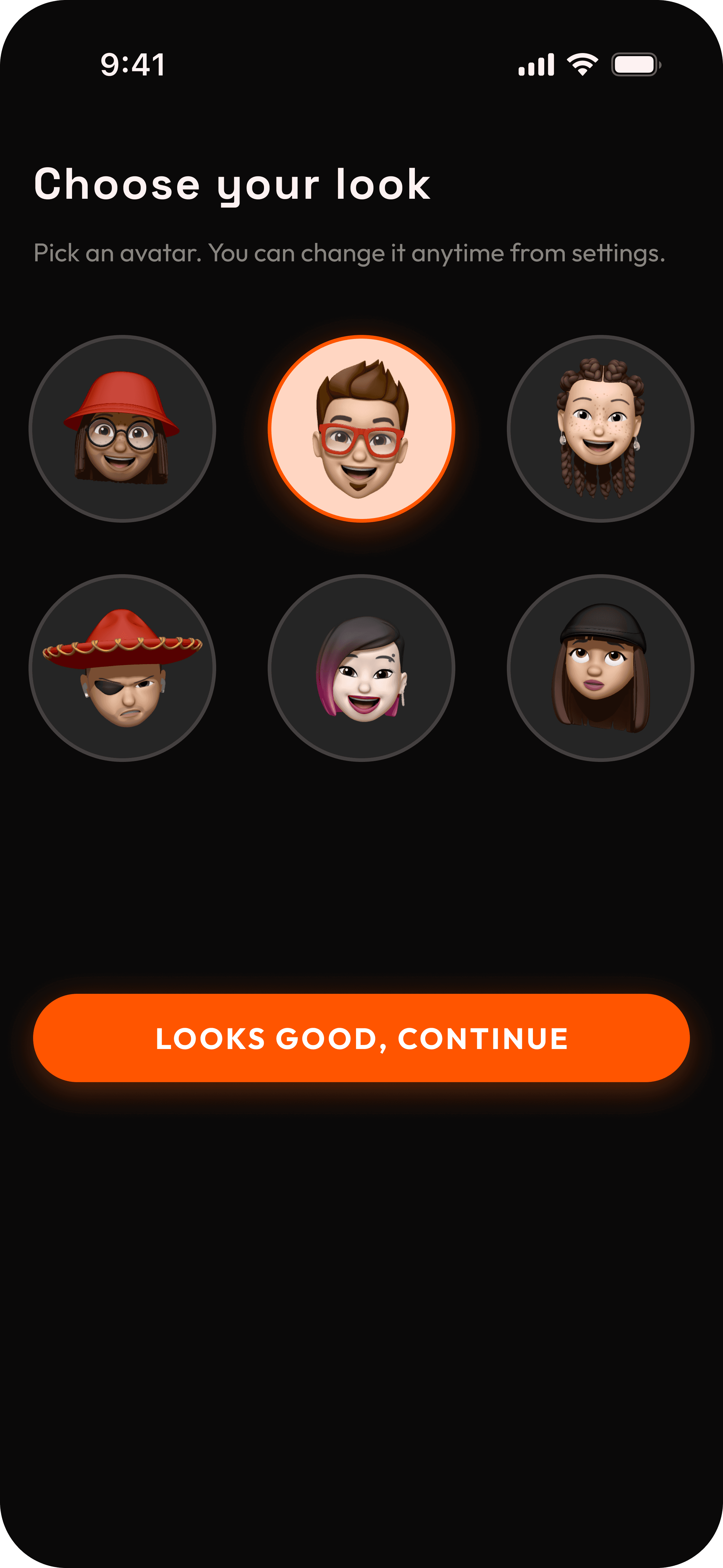
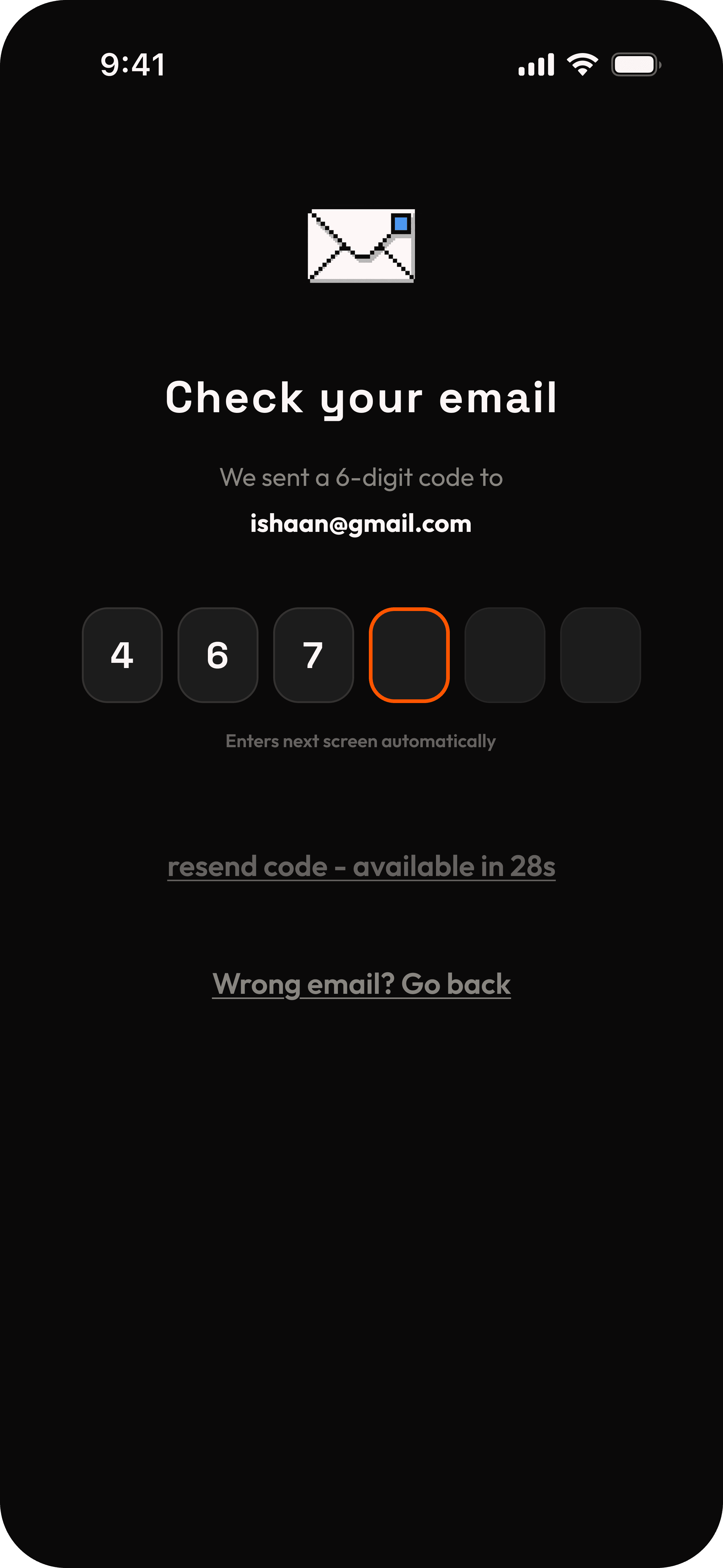
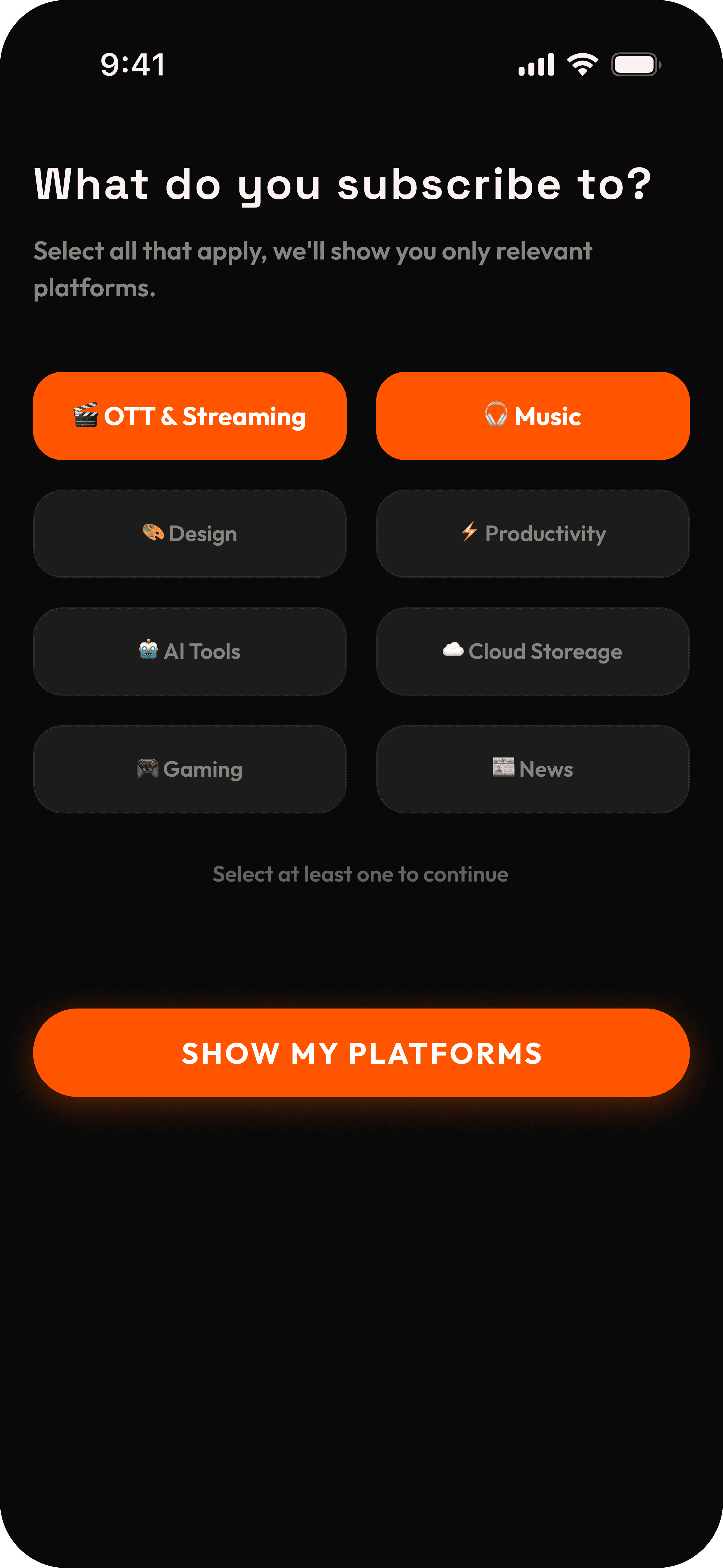
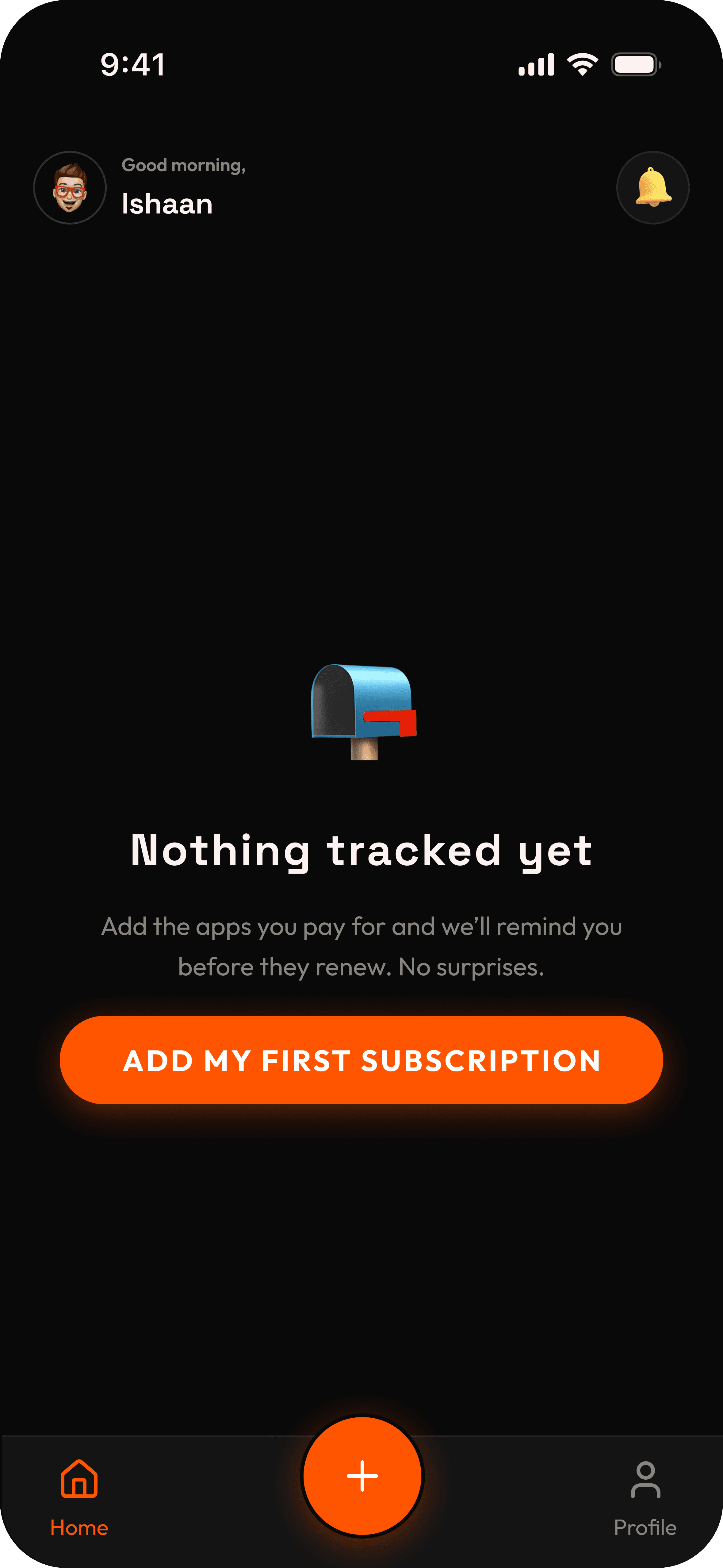
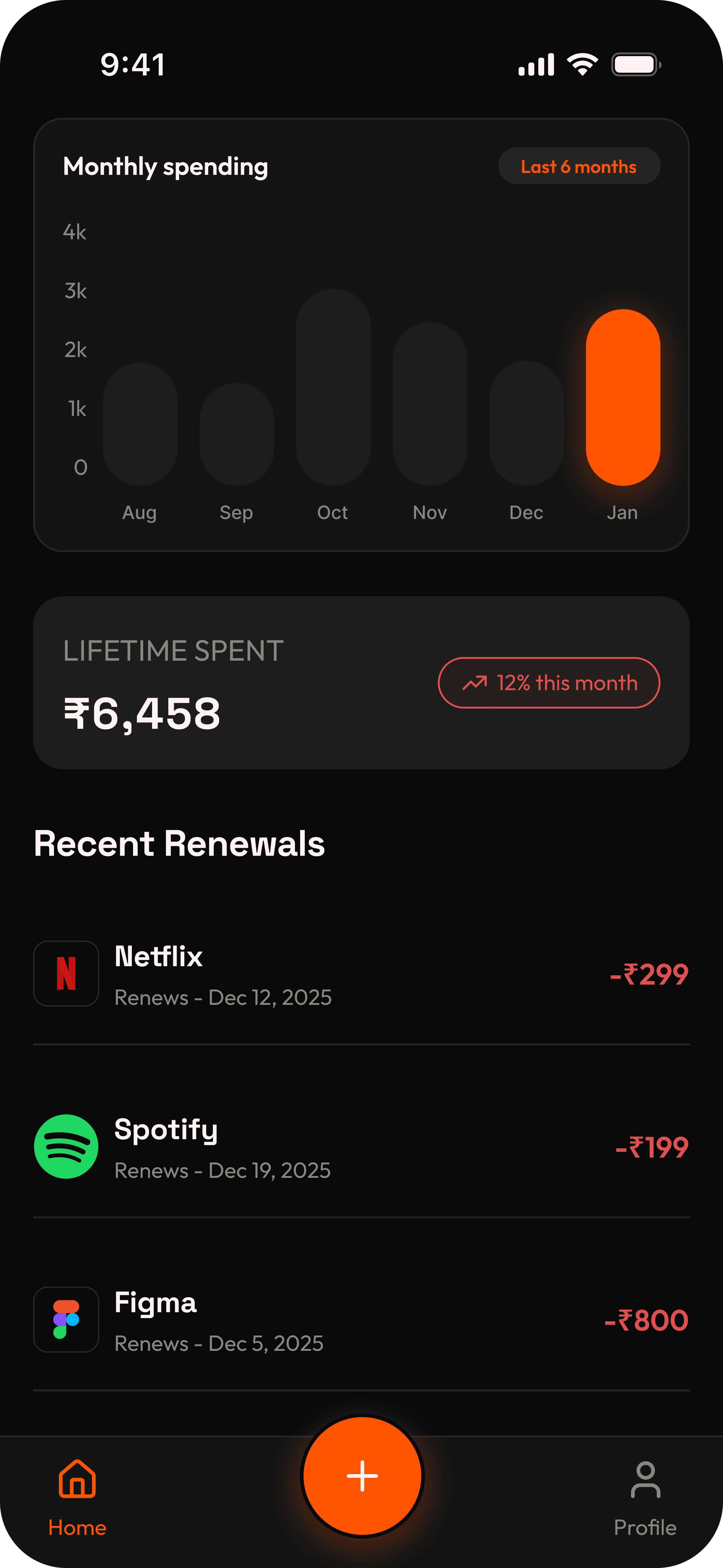
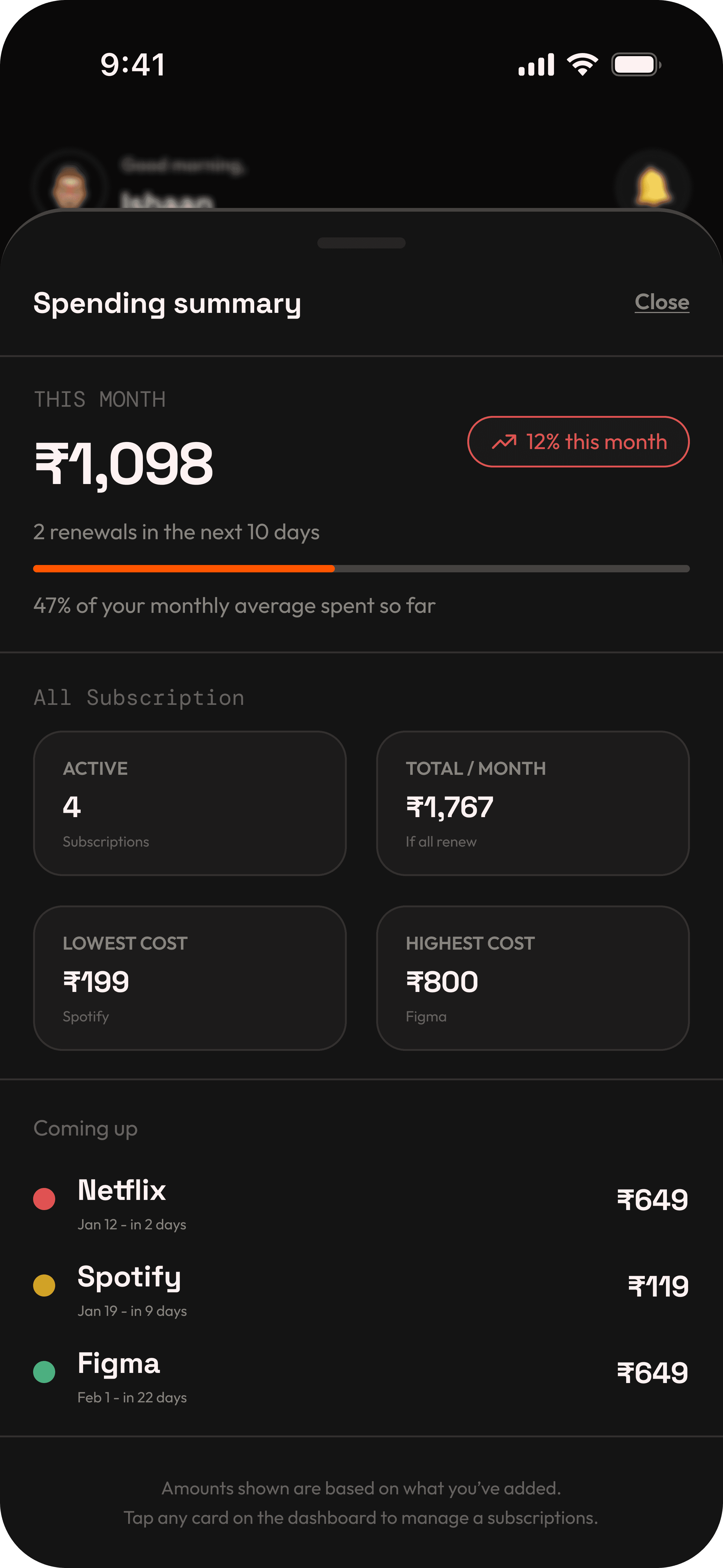
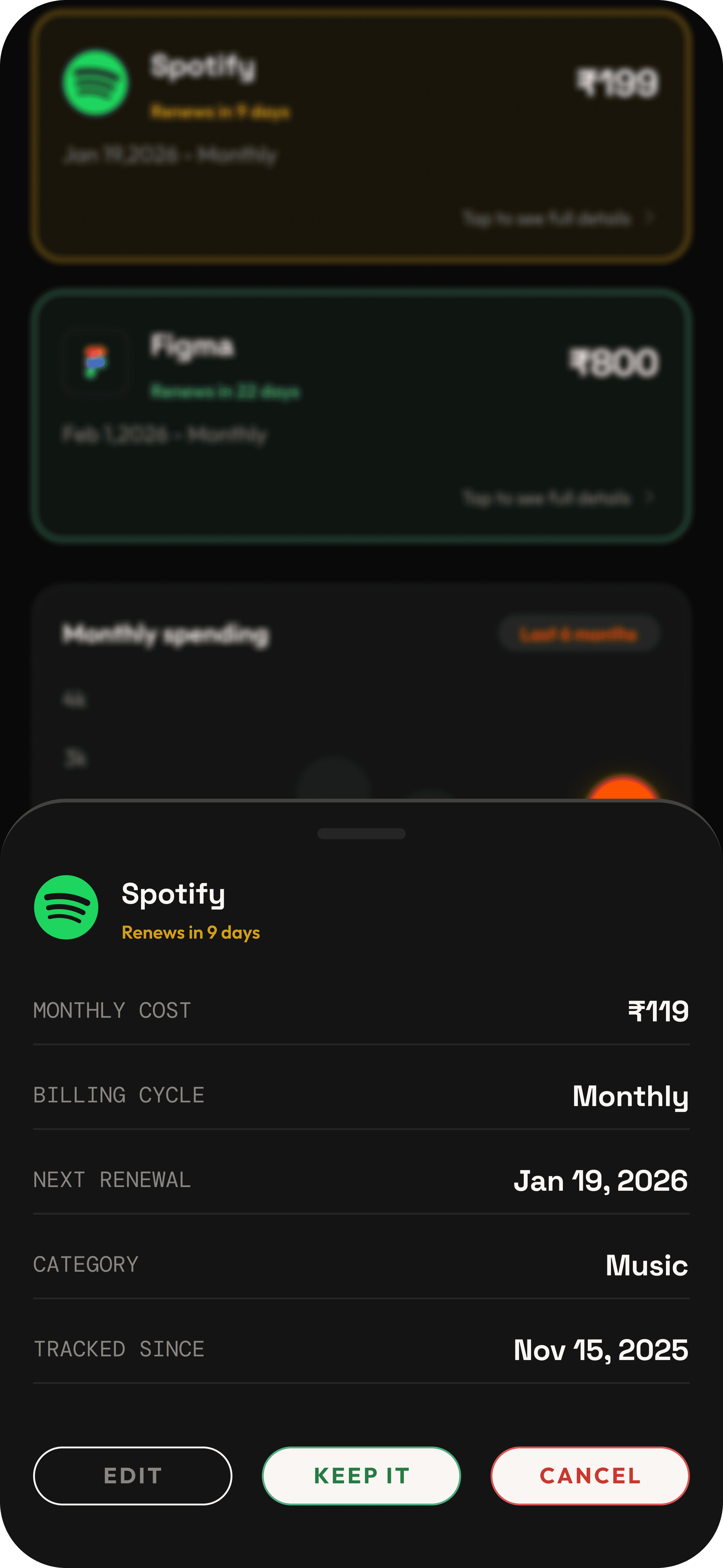
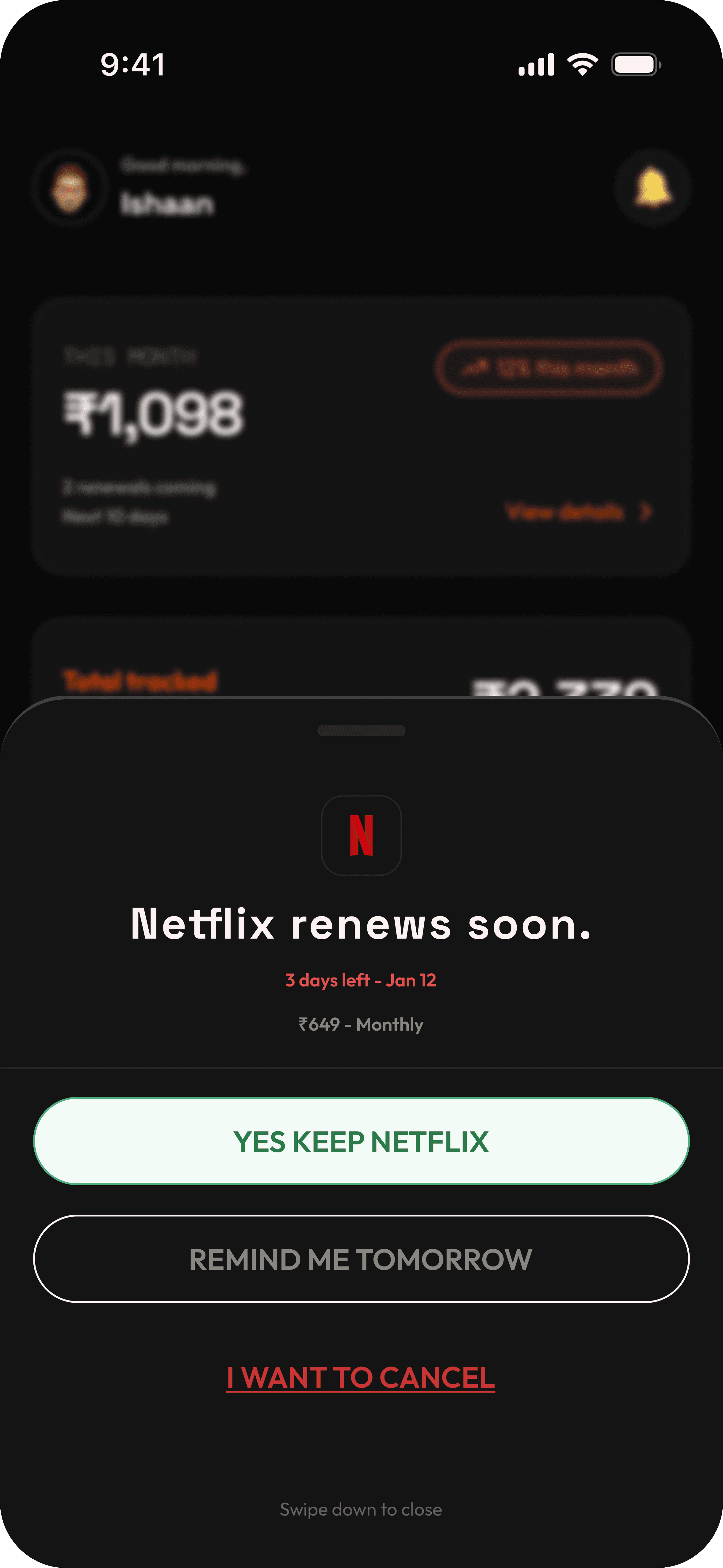
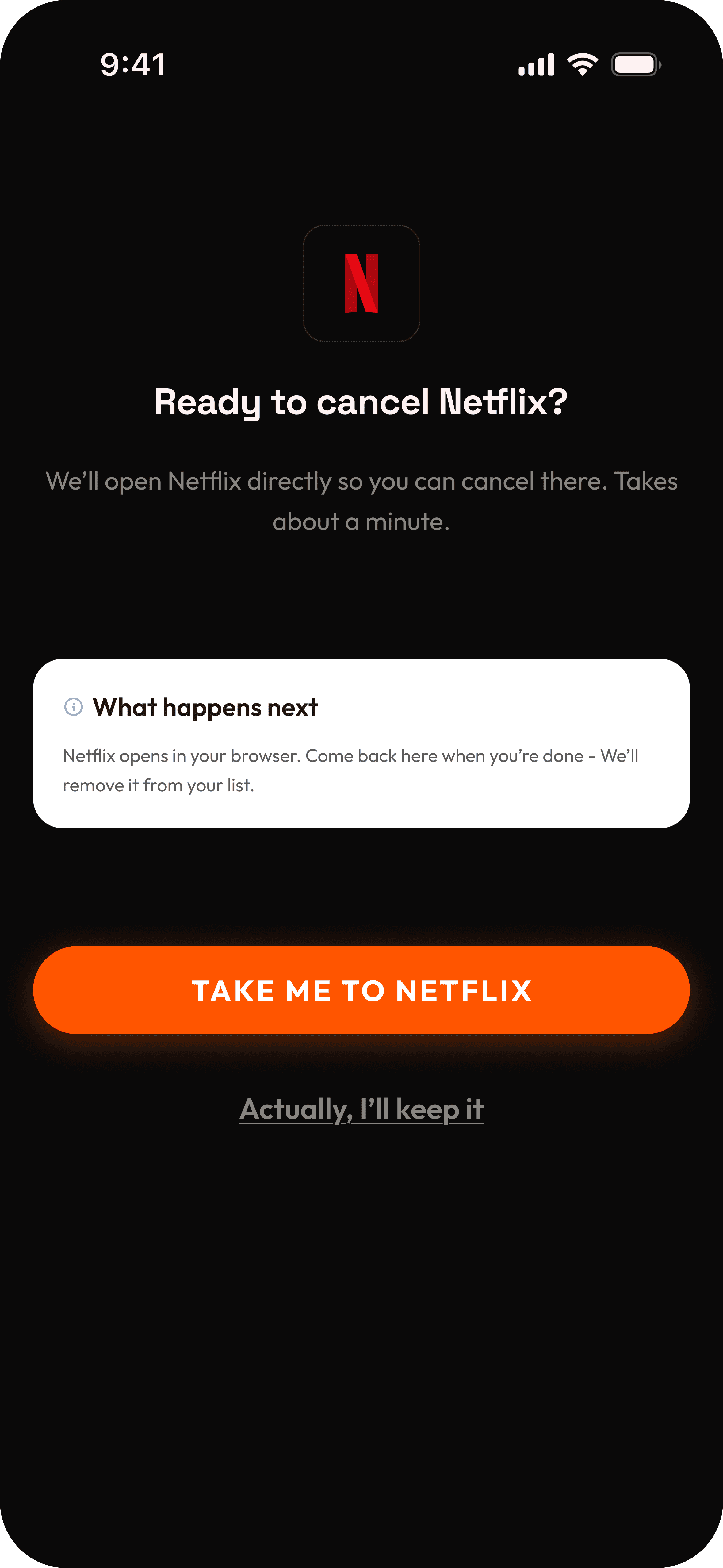
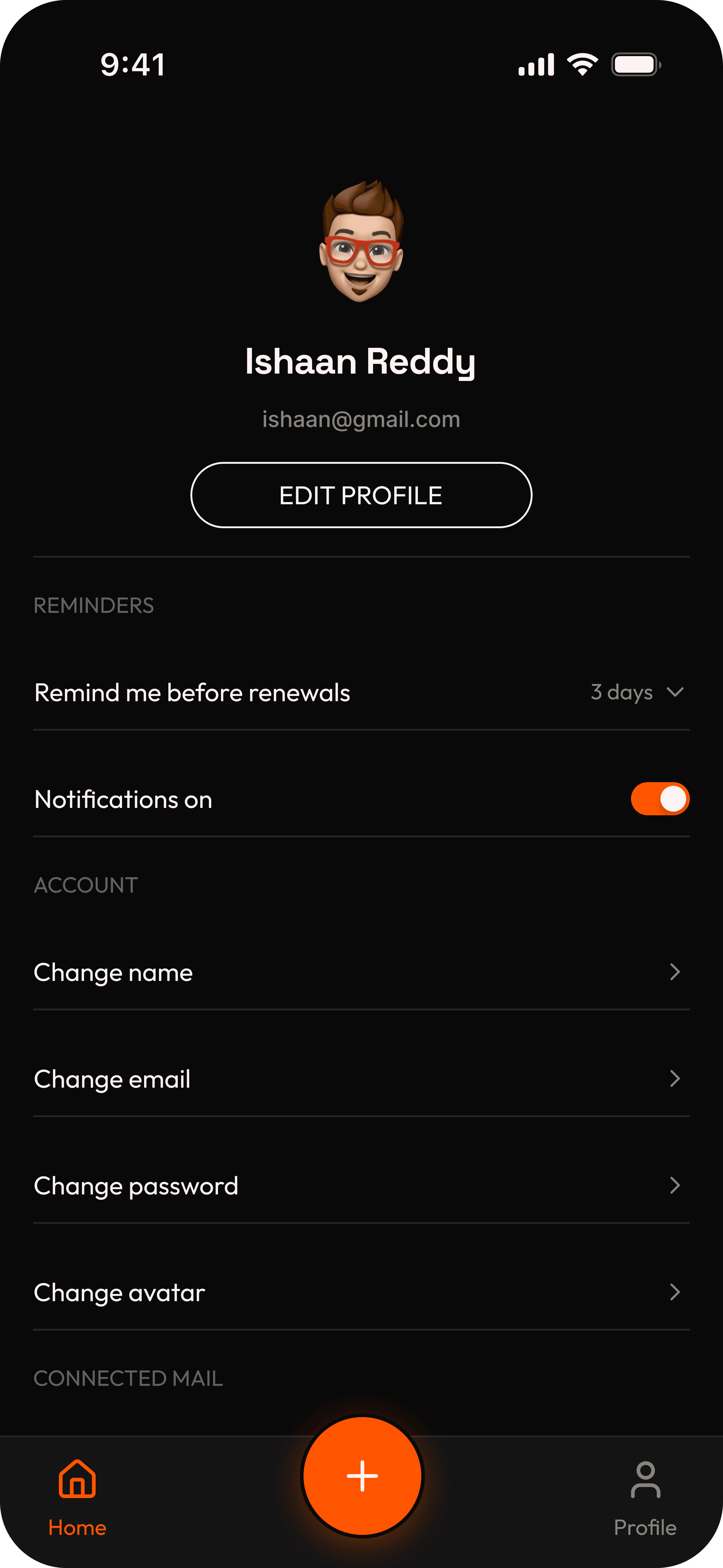
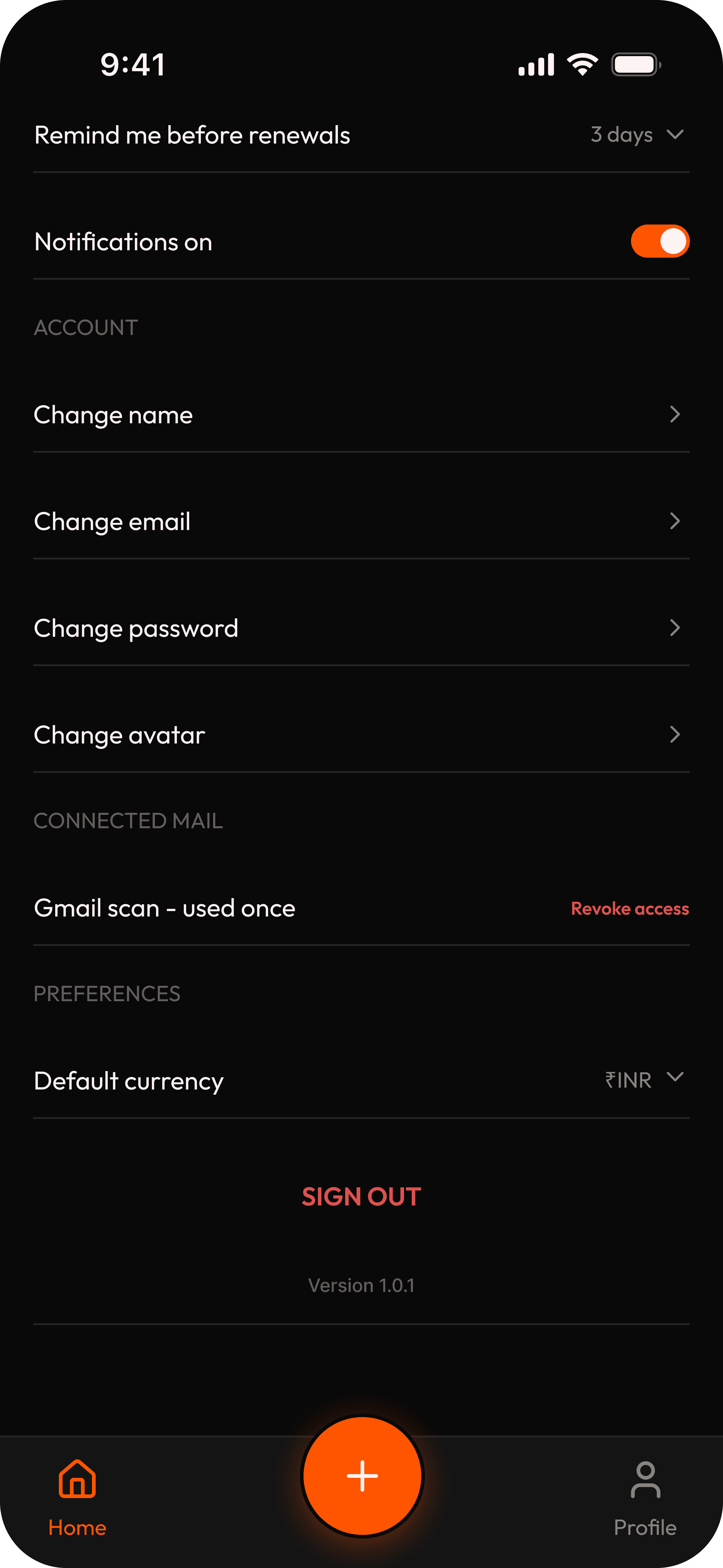
From the first intro screen Ishaan sees to the moment he successfully cancels a subscription — every screen has real UX copy applied, every interaction documented.

From the first intro screen Ishaan sees to the moment he successfully cancels a subscription — every screen has real UX copy applied, every interaction documented.

08

BRAND IDENTITY

A name that earns
its meaning.

A name that earns
its meaning.

Phonetically close to "renew." All lowercase — approachable, not corporate. The "v" in orange carries the brand signal. A glow dot on the period — the alert arriving before you need to look for it.

Phonetically close to "renew." All lowercase — approachable, not corporate. The "v" in orange carries the brand signal. A glow dot on the period — the alert arriving before you need to look for it.

renvu.

renvu.

The name was chosen because it sounds like "renew" — the user's brain connects it immediately without explanation. That familiarity without genericness is what makes a product name work.

The name was chosen because it sounds like "renew" — the user's brain connects it immediately without explanation. That familiarity without genericness is what makes a product name work.

The brand archetype is The Hero — renvu acts before you have to. It does not celebrate after the fact. It shows up 3 days before the renewal, gives you the information, and lets you decide. Quiet confidence. No drama. Just presence at the right moment.

The brand archetype is The Hero — renvu acts before you have to. It does not celebrate after the fact. It shows up 3 days before the renewal, gives you the information, and lets you decide. Quiet confidence. No drama. Just presence at the right moment.

09

UX WRITING

Copy that sounds like
a person.

Copy that sounds like
a person.

Every word in renvu was decided before opening Figma. 24 screens. Every button label. Every error message. Every empty state. All applied through a ux-writer skill — four questions before writing a single word.

Every word in renvu was decided before opening Figma. 24 screens. Every button label. Every error message. Every empty state. All applied through a ux-writer skill — four questions before writing a single word.

BEFORE → AFTER

"Cancel" → "I want to cancel"

A bare "Cancel" on a destructive action feels abrupt. "I want to cancel" is personal and intentional — Ishaan owns the decision. The difference between a button and a statement.

TRUST COPY

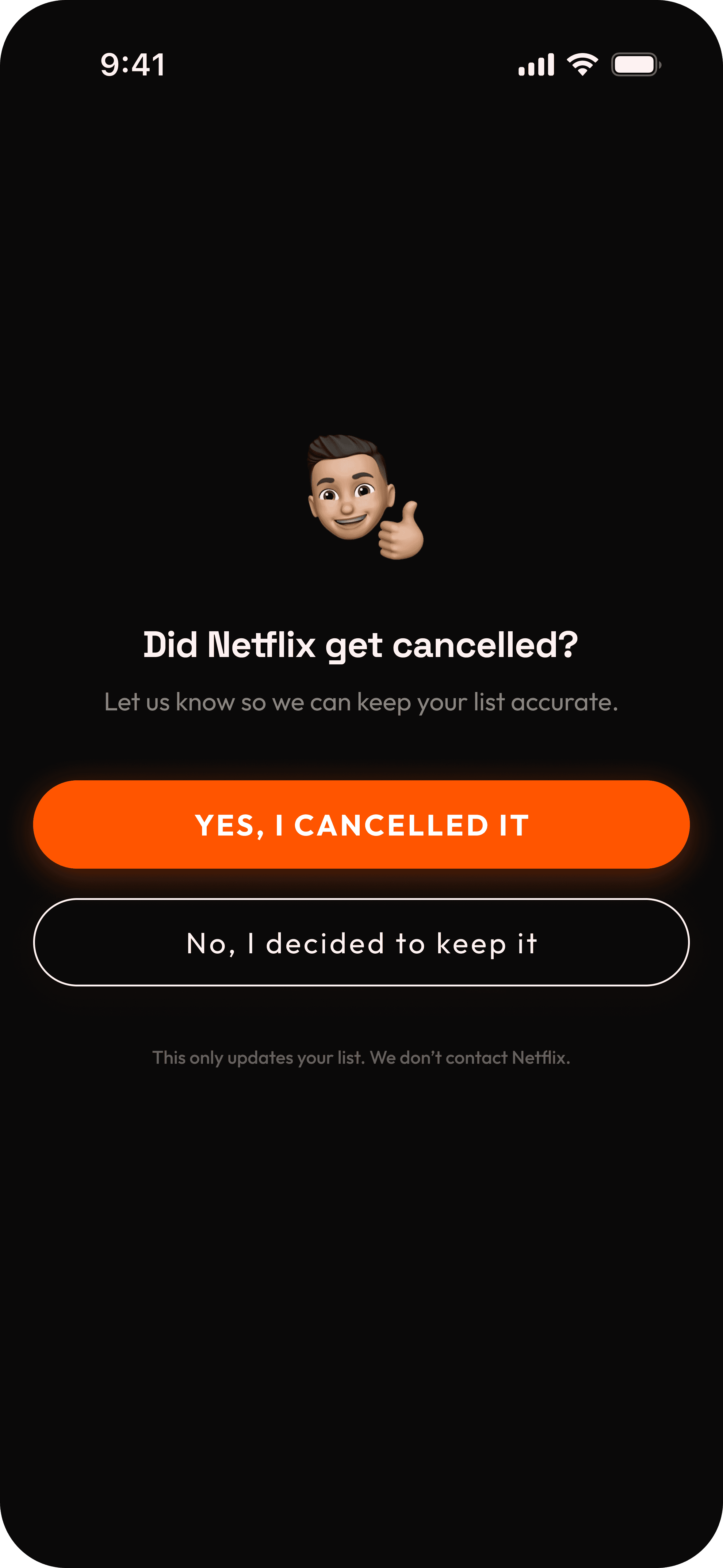
"We don't contact Netflix."

Users fear that confirming a cancellation in the app does something to their Netflix account. It doesn't. Say it explicitly. The best UX writing pre-empts the question Ishaan hasn't asked yet.

10

DESIGN SYSTEM

Built to scale.
Tokens first.

Built to scale.
Tokens first.

renvu's design system follows a strict 4-layer token hierarchy — the same approach used by Google Material, Shopify Polaris, and IBM Carbon. Every component references a token. No hardcoded values.

renvu's design system follows a strict 4-layer token hierarchy — the same approach used by Google Material, Shopify Polaris, and IBM Carbon. Every component references a token. No hardcoded values.

The system is universal — the atomic design framework built for renvu applies to every product that comes after it. Tokens, atoms, molecules, organisms. Change a primitive, everything updates. One source of truth.
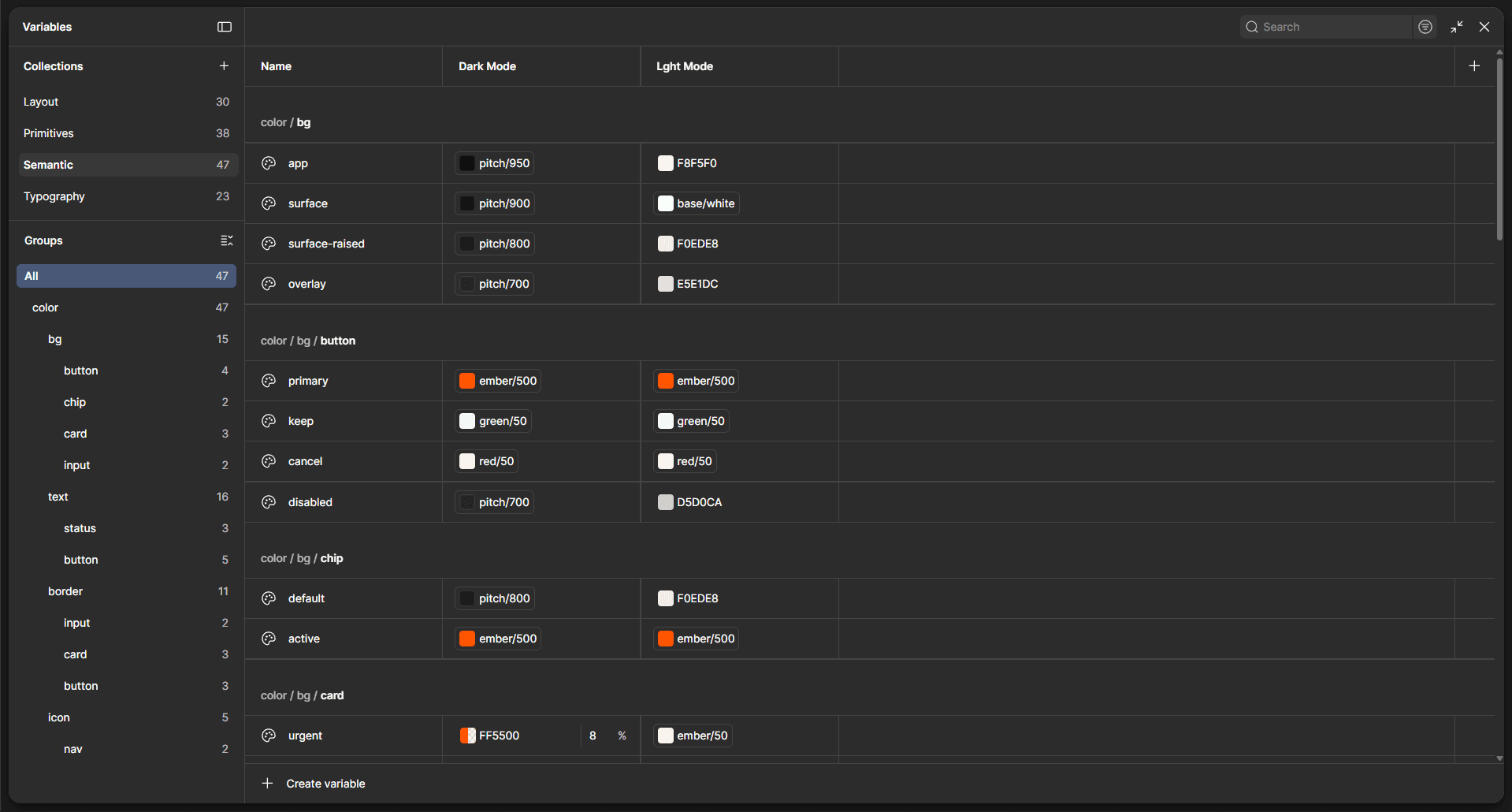
~213 variables across 5 Figma collections. Primitives (colour scales), Semantic (dark + light modes), Typography (T-shirt sizing), Layout (spacing, radius, stroke), Component (wired to semantic).

~213 variables across 5 Figma collections. Primitives (colour scales), Semantic (dark + light modes), Typography (T-shirt sizing), Layout (spacing, radius, stroke), Component (wired to semantic).

12

REFLECTION

What I learned.

What I learned.

A zero-to-one project forces you to justify every decision. When there is no brief, the research becomes the brief. When there is no client, the user becomes the client.

A zero-to-one project forces you to justify every decision. When there is no brief, the research becomes the brief. When there is no client, the user becomes the client.

That's It Thankyou :)

That's It Thankyou :)